
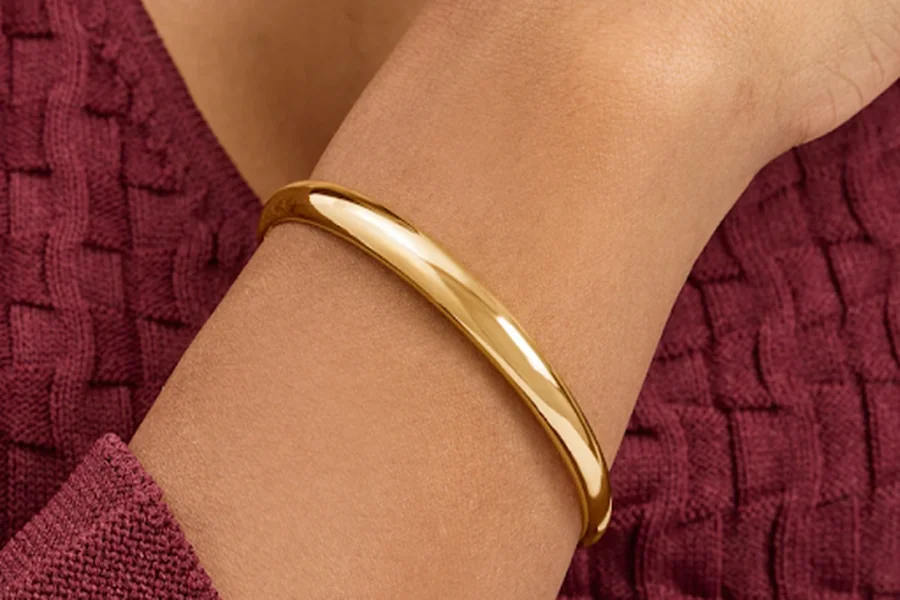
The bracelet comes out of its pouch whenever the drawer needs sorting. You fasten it, admire it for a moment, then remember why it stays home: the shape catches on sleeves, or the style belongs to a different chapter of your life. Selling it seems practical until the memories arrive. Before asking what a buyer might pay, it helps to decide what, exactly, you would be comfortable letting go.
Give the memory its own space
A resale assessment cannot measure the pleasure of receiving a gift or the person associated with it. Those feelings deserve consideration outside the pricing conversation. Ask whether the bracelet matters as an object you use, a reminder you enjoy keeping, or something you feel obliged to retain. None of those answers requires an immediate sale.
Try looking at it somewhere other than the crowded drawer. Wear it during an ordinary afternoon, or place it beside pieces you regularly choose. The exercise is simply a way to notice your response. A bracelet that feels wrong for daily wear may still be worth keeping. Equally, affection for its history does not automatically mean wanting to own it indefinitely.
Gather information without making a commitment
If curiosity about its resale value remains, an assessment can be treated as an information gathering step. Before handing anything over, clarify whether an inquiry carries a fee, what testing involves, and whether you can decline the offer. Ask for those terms rather than assuming that a friendly conversation creates no obligations.
For a buyer’s account of the next steps in Thailand, BKK Diamond’s perspective on selling gold jewelry provides context about assessment and arranging contact. It is useful as a description from the business itself, rather than independent proof that its offer will suit every owner. Your decision still depends on the terms actually explained for your bracelet.
You might also want to photograph the piece while you still have it. Images can preserve details that memory softens: the worn edge of a clasp, the particular curve of a link. They are not a replacement for the bracelet, but they can help distinguish wanting to remember something from wanting to keep the physical object. If other family members connect the bracelet with a shared occasion, consider whether you want a conversation with them before deciding. That is a personal choice about relationships, separate from any buyer’s assessment of the metal.
Make a decision you can explain to yourself
Consider what would make either outcome feel settled. Keeping the bracelet might mean giving it a proper place instead of repeatedly reconsidering it. Selling might require an offer you understand and enough time to think without someone waiting for an answer. Neither choice needs to be justified by a dramatic change in circumstances.
If you remain uncertain after an assessment, taking the bracelet home is a complete decision for that day. Information has value even when no transaction follows. The most useful outcome is a clearer relationship with the piece, whether it returns to your wrist, stays in its pouch, or eventually leaves your collection.
